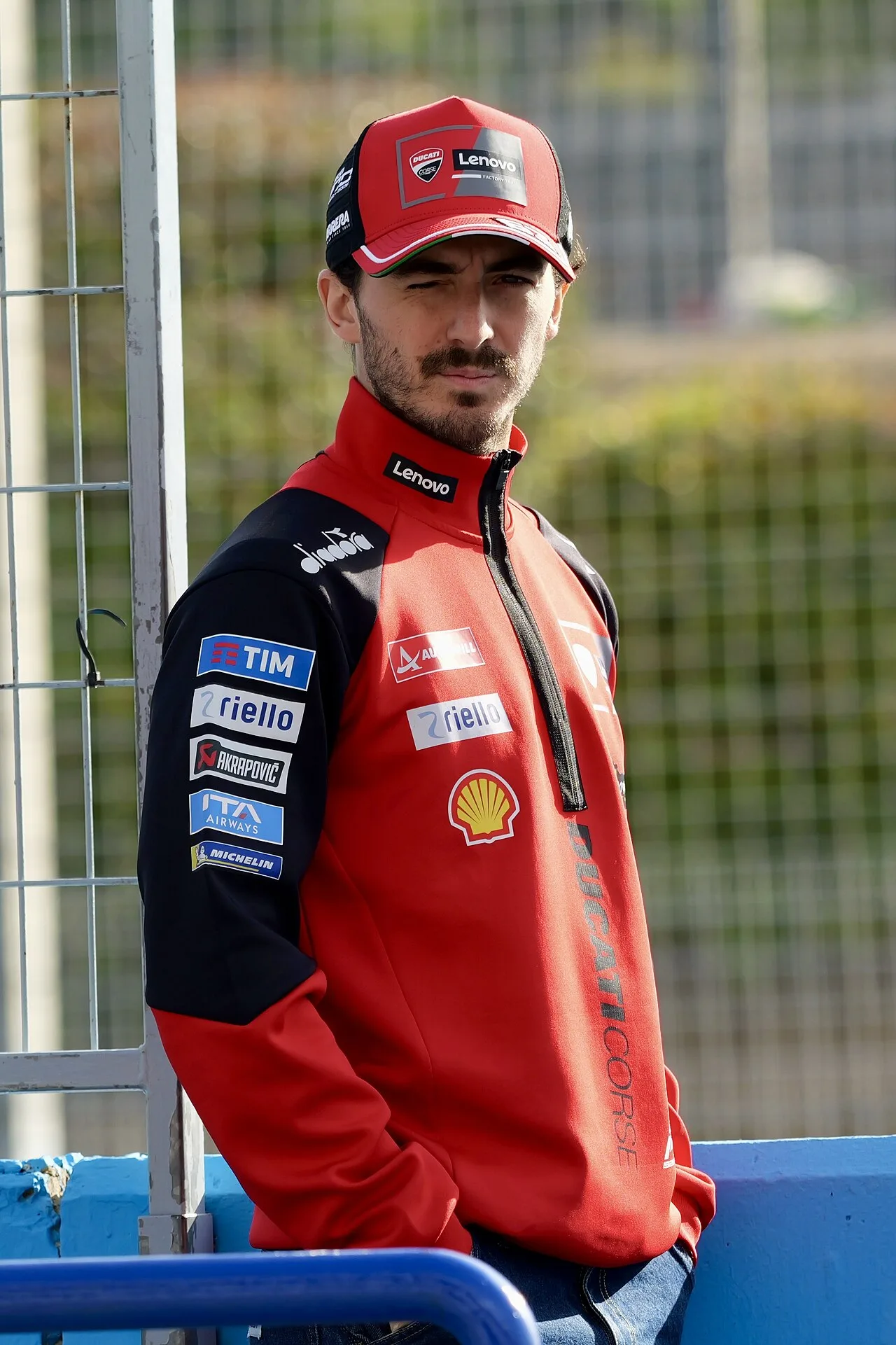

Mugello is the home of Italian motorsport. The circuit sits in the Tuscan hills, Ferrari owns the land, and Ducati treats this weekend as the emotional centre of their season. For bettors, that creates the single most consistent pricing distortion on the MotoGP calendar: the tifosi discount, where Italian-manufacturer riders — and especially factory Ducati — are systematically shorter in the outright market than their form book supports.
The 2026 Mugello round arrived with the championship still led by Marco Bezzecchi and Aprilia after Le Mans and Barcelona, but with the factory Ducati team having shown the best qualifying pace on the grid at multiple circuits without converting it to enough Sunday wins to close the points gap. Mugello was always going to be the weekend where that equation tilted most heavily in Ducati's favour.
The straight-line speed premium at Mugello
Mugello's 1,141-metre main straight is the longest on the MotoGP calendar, and the circuit layout includes multiple acceleration zones where peak power and aerodynamic efficiency translate directly into lap time. In 2026, with the active-aero regulations now fully mature, the Ducati GP26's straight-line advantage over the Aprilia RS-GP was expected to be widest here.
The betting application is straightforward: at Mugello, top-speed data from free practice matters more than at any other circuit on the calendar. A bike that gains two-tenths on the straight alone will compound that advantage across the lap because the exit speed from the final corner — Bucine — determines the entry speed into San Donato, and the aero efficiency through the straight determines how much of that advantage carries through the entire sector. When the speed traps show a clear Ducati advantage, the outright market is unlikely to have fully priced the compounding effect.
The tifosi discount in practice
The tifosi discount is not a myth. Historical Mugello data shows that Ducati outright odds are 15 to 20 percent shorter than the pre-weekend form book justifies. Over the last six Mugello editions, the Ducati podium rate has been approximately 65 percent, not the 85 percent-plus implied by the pre-race odds. The correction typically arrives in Friday practice, but not fully — public money flowing into Ducati at their home race keeps the price artificially short through Sunday morning.
For value bettors, that creates a structural opportunity in the non-Ducati podium finish markets. Aprilia, Honda, and KTM riders available at podium prices that are too long relative to the actual Ducati podium conversion rate represent the most mathematically sound position at Mugello. It is not a prediction that Ducati will lose; it is a recognition that the price is wrong relative to the probability.
The Sprint Saturday speed-fade pattern
Mugello's high-speed nature means the Sprint race produces a specific tyre-degradation signal that is more valuable here than at most circuits. Riders who push the front tyre too aggressively through the Casanova-Savelli complex in the Sprint's early laps tend to lose pace visibly in the final third of the half-distance race. That fade is the single most reliable predictor of Sunday performance at Mugello.
Bettors watching the Sprint should focus on the lap-time delta between laps three and eight — not the final result. A rider who maintains lap time within two-tenths of their early Sprint pace through the closing laps is showing a front-tyre management profile that will scale to full race distance. The market rarely fully reprices the Sprint fade signal before Sunday morning, creating a narrow but consistent window for position.
Championship implications entering the summer break
Mugello is round eight, the final European race before the summer break reshuffles the paddock. The championship leader exiting Mugello carries a psychological advantage into the break, and the futures market typically tightens around that leader in a way that overshoots their true probability of holding the lead through the remaining rounds.
If Aprilia retain the lead after Mugello, the championship price will shorten more than it should because the market will treat a Ducati home-race defeat as a structural signal rather than what it may simply be: a circuit-specific disadvantage that does not travel to the post-break calendar. If Ducati reclaim the lead at Mugello, the Aprilia price will open up, and the post-Mugello Aprilia championship futures may represent the best value entry point of the season.
What Mugello tells you that Mugello cannot tell you
Mugello reveals who has the best straight-line aero package. It does not reveal who has the best overall bike. The post-Mugello narrative always overweights the Italian GP result because it is dramatic and because the Ducati story is emotionally compelling. The sharper betting response is to treat Mugello as a single, biased data point — highly informative about straight-line performance, less informative about the all-round competitiveness that will determine the championship across the remaining varied circuits.